Welcome to the Mirror of Galadriel, a series in which we explore things that were, things that are, and things that yet may be.
To celebrate reaching #10 in the series, the article is a little different today. Instead of revealing an interesting fact from Redemption's past, there is a special announcement about the future.
Things That Were: Defunct Multiplayer Formats
In the early days of Redemption, there were three options for multiplayer games: Type 1 Multiplayer, Type 2 Multiplayer, and Booster Draft.
If you are unfamiliar with Type 1 Multiplayer and Type 2 Multiplayer, they were the official formats for games with 3 to 5 players using the same deck-building rules as Type 1 2-Player and Type 2 2-Player, respectively.
Although these formats were offered for many years, they had several problems, and as their popularity declined, they were eventually phased out in favor of a new "Teams" format (which makes the game 2v2 instead of 1v1v1v1).
If you have ever played a traditional multiplayer game, you have most likely realized that Redemption functions much better head-to-head than it does with 3 or more players. There are many reasons why the game starts to break down with a third player, but they can be summarized by four main issues:
- The Defense Problem
- The Time Problem
- The Board-State Problem
- The King-Making Problem

The Defense Problem
The most fundamental issue with traditional multiplayer is that it incentivizes players to run little to no defense. The game's balance between good and evil is broken.
If you have the strongest defense, then other players will be too intimidated to attack you, and they will attack other players instead. This is a problem for you because you never get to block (to use your helpful evil abilities) and because it may cause everyone else to run out of Lost Souls (so that none are left for you to rescue on your turn). You will just get frustrated as all your evil cards are wasted and your soul drought worsens.
But even if other players are attacking you, you'd still rather have more good cards than evil cards. This is because Redemption is a race, and when you have multiple opponents, slowing down one opponent is less helpful than speeding up yourself. Why waste several cards to block just one opponent when you could instead have cards to ensure you get a rescue of your own?
Back in the day, I had a lot of success locally with Type 1 Multiplayer using my "Scrambled Eggs" deck that was almost entirely good cards, with only a couple chump-block Evil Characters for emergencies. But even though I won a lot of tournaments with the deck, I always felt kinda bad about it, because it just felt wrong to play without a defense. It may not sound like a big deal, but imagine how boring a game would be if no players had any defense. There would be no interesting battles, and victory would always go to whoever is the luckiest with soul drought and drawing key Dominants.

The Time Problem
Traditional multiplayer games can be terribly slow. By this I am not referring to the total time they take (though that is of course longer than normal), but rather how long each player has to wait between turns or between meaningful interactions.
When you have multiple opponents, you have to sit through multiple turns before you can take yours. Turns of Redemption can be quite long, so this is not a small difference. The higher the player count, the bigger the problem becomes. And if your turn is wasted via soul drought or some other situation, your frustration is magnified by how long you must wait to get another chance.
At least in 2-Player games if opponent takes a longer turn, you are generally able to interact in the battle and do something interesting. But in multiplayer, it is not unusual for entire rounds to go by without ever having a chance to block, because everyone just attacks the player with the weakest defense.
This problem is the one that causes boredom, which is the opposite feeling from what we want Redemption to foster. For Redemption to be fun and engaging, players need to be able to stay involved with minimal breaks.

The Board-State Problem
Because cards in Redemptions do not have costs to play, it is easy to fill the board with an overwhelming quantity of cards with special abilities to track. As complexity has gradually increased over the years, the issue has become more severe. Board states sometimes become overwhelming even in 2-player games, and multiplayer only magnifies the issue. Imagine playing a 5-player game and having to keep track of everyone's Lost Souls, Fortresses, Artifacts, territory-class Characters, etc.
Even if you are experienced and feel prepared for this, it is important to remember what a turnoff it is for inexperienced players. The mental energy required to keep playing can turn the game into a daunting chore.

The King-Making Problem
King-making refers to your ability in multiplayer to let one opponent win instead of another. For example, you might choose to give an opponent a free Lost Soul by not blocking. Or you might save all your Dominants for use against one player. Or you might "gang up" with other players against one particular opponent.
Of the four problems, this is arguably the least significant. When it doesn't go too far, it can actually be a healthy balancing force for the game, because it can help losing players catch up. After all, when players "gang up" it tends to be against whoever is in the lead.
However, in practice, the king-making does not always feel so fair. Sometimes players gang up with their friends or family members against an outsider. Other times players gang up against a player who just has a reputation for being a good player or who won an earlier category. Even if this behavior is not intended, the mere perception of it can cause any uneven play to feel personal.
Even when players are perfectly impartial, they can still get a mistaken view of who is actually most likely to win and ignore the biggest threat. It's not uncommon for someone to spend the last of their defensive tools against one player, only for the very next player to walk in for an easy rescue to win the game. Thus, even the fairest of games can have conclusions that feel unearned.
Things That Are: Current Multiplayer Formats
Today, official options for playing Redemption multiplayer look very different. Both Type 1 Multiplayer and Type 2 Multiplayer have long been retired as official tournament formats (though of course you can still play them casually if you are willing to suffer through their flaws).
Booster Draft remains an official format, but it is now most often played as 2-player instead of multiplayer. I know some people prefer the multiplayer option, but I definitely don't. We always select the 2-player option for our Booster Draft tournaments here in California. The game simply functions much better in head-to-head matches, especially when playing competitively. Players actually draft some defensive cards, and the games have interesting back-and-forth battles.
So for most tournaments, the only multiplayer option is to play Teams. The Teams format solves a couple of the multiplayer issues because it eliminates the defense problem and the king-making problem. However, it does not solve the time problem or the board-state problem. If anything, it makes them even worse than traditional multiplayer.
I am glad Teams exists for the people who enjoy it, but I am not one of them. In my opinion, the power ceiling of a well-built pair of decks is too high, making it overly difficult to try out the format with less optimized decks. Board states quickly spiral out of control, especially because decks must be very fast to compete, and because cards like Lost Souls and Fortresses are shared. Turns are extra long and complex. Games can end before anyone even gets a third turn. It's neat to see what strategies players come up with to pair up decks, but in practice the gameplay is not what I'm looking for in a game of Redemption.
Maybe you like playing Teams, or you think multiplayer Booster Draft is just as fun as 2-player Booster Draft. If so, that's great! I hope you keep enjoying them. But no matter how fun they are to you, a significant issue remains: neither of these formats is good for new players.
Booster Draft is expensive to play repeatedly, and it requires some skill and experience not to end up with a terrible, unfun deck. If you can afford it and have the experience, then it can be a blast, but the barrier of entry is still very high for newer and younger players. Plus, players want to have a multiplayer option in which they can bring their own personal deck instead of just using the cards they open.
Teams is not as expensive, but it is nevertheless complex and punishing to players without optimized decks built specifically to compete well together. Furthermore, not everyone has a great Teams partner they can count on. Not to mention that Teams only works with exactly 4 players, and is not even an option when you have 3 or 5 people wanting to play together.
I believe that Redemption is in need of a new format that does all of the following:
- Accommodates any of these player counts
- Avoids the four problems of traditional multiplayer
- Maintains a low barrier of entry (in terms of complexity, monetary cost, learning curve, etc.)
A great multiplayer format could go a long way in helping us share the game with new players. After all, the easiest way to bring a new player into your group is just to have them join a game you were already going to play. But this only works if your game can add another player, and only if the barrier of entry is low enough for them to enjoy it.
If you pay any attention to Magic the Gathering, which remains the biggest CCG on the market, you are likely aware that its most popular format is Commander, a casual multiplayer format. I think the fact that Redemption has no comparable format reveals a major opportunity for growth. Players want to be able to enjoy casual games in larger groups, and Redemption currently has no ideal option for this.
Things That Yet May Be: The New Format
This brings me to an announcement: for the past couple months, I have been working on such a format, and it is almost ready to share.
By way of some unique twists and rules adjustments, the new format does all of the following:
- Can be played with any number of players from 2 to 5
- Eliminates the Defense and Board-State problems
- Mitigates the Time and King-Making problems
- Ensures a lower barrier of entry than even Type 1 2-Player (in terms of both cost and complexity)
- Offers unique deck-building opportunities for a truly fresh experience
To be clear, this format is unofficial. You won't see it offered in official tournaments. But it can be an excellent way to play the game casually. The California playgroup has had a lot of fun with it in our testing so far.
For the next few weeks, I will pause the "Mirror of Galadriel" series while I gradually preview the format.
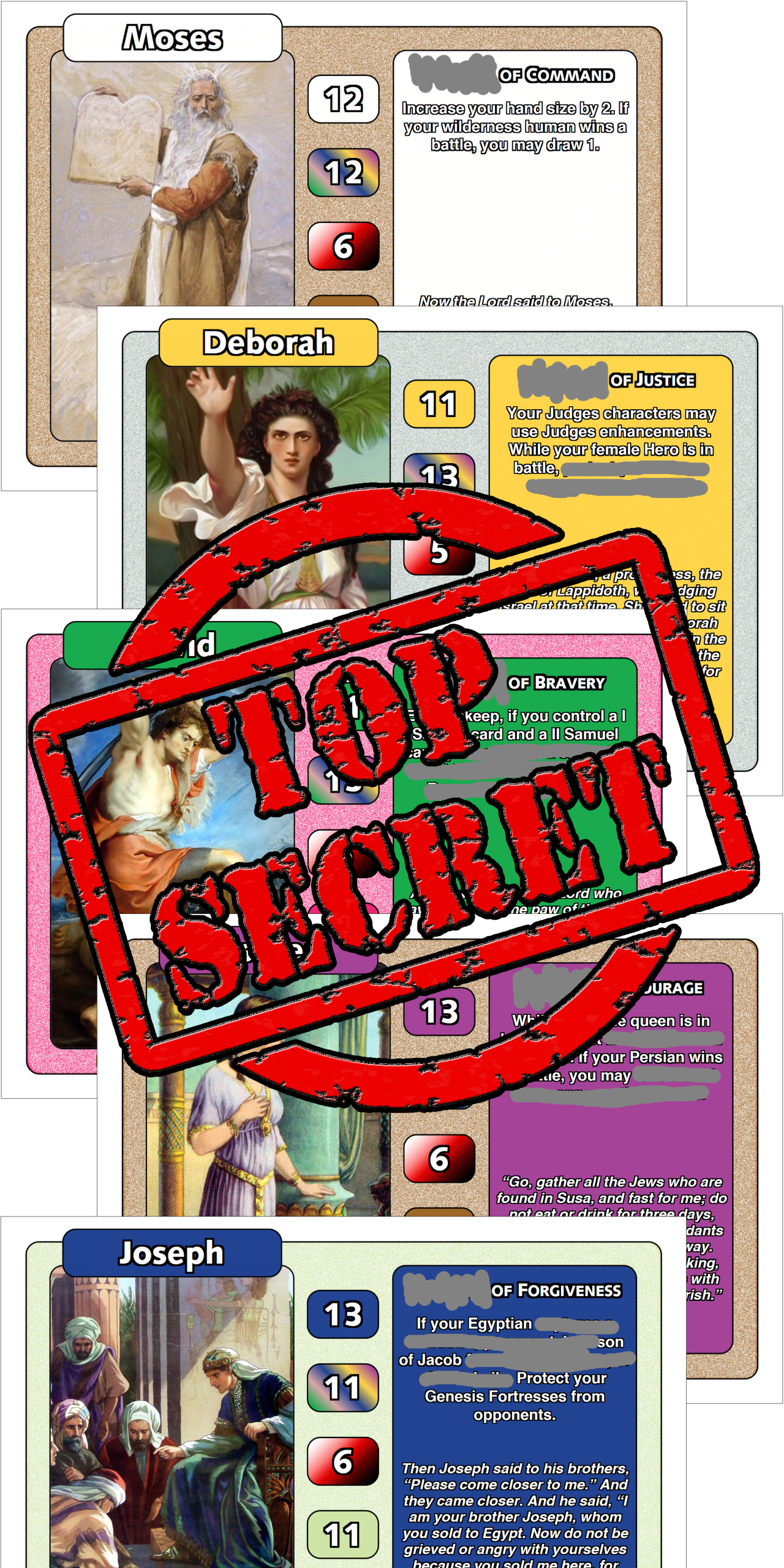
I am very eager to share it all with you, but for now I will leave you with just a teaser hinting at one of the format's biggest twists.
To buy singles, sealed product, and other gaming supplies mentioned, please visit our sponsors!