Whether you're new to Redemption or have been playing casually for some time it’s possible that you don’t have a good grasp on some of the phases of a turn. You might even be asking, “what are the phases of a turn?” That’s a great question!
The Five Phases of a Turn
First, let’s list the phases – Draw, Upkeep, Preparation, Battle, and Discard. We’ll take some time to explain each phase including what you can and cannot do in the phase. Today we will cover the first three phases, leaving the final two phases for a follow-up article.
During any phase a Dominant can be played by either player provided there are no special abilities being carried out at the time it is played. Rather than repeat that for each phase, I’ll only point this out once here at the onset.
Draw Phase
The draw phase is the very first phase of each turn. You begin your draw phase by drawing three cards. For each Lost Soul card that you draw you draw a new card to replace it. This phase is not optional, so you must draw at the start of your turn.
The only other action that can be performed during the draw phase is the playing of a Dominant. In a Type 1 game if you have 4 Redeemed Souls and draw your Son of God card you may play it to rescue an opponent’s Lost Soul and win the game.
Upkeep Phase
The upkeep phase is used to count turns for cards that indicate a specific duration. Historically this applied only to set-aside cards like Gathering of Angels. More recently it has also expanded to apply to cards in play with limited turn based abilities like Seven Years of Plenty and the card made popular by last years T1-2P National winning deck – Arrest in Gethsemane.
The upkeep phase is also a time when certain game abilities, called triggered effects, take place. These are most often found on a Fortress and require another condition to be met. A couple examples are Alexandrian Ship and Areopagus.
Probably the most common upkeep effect in competitive play today is selecting what to negate with Three Woes. It’s not uncommon for players to overlook an upkeep triggered effect until they’re into the preparation phase. Play close attention so you don’t miss an opportunity!
Preparation Phase
There are more different game actions a player can perform during the preparation phase than any other phase of the game. You can perform the actions in any order you choose, so you should play them in the order that will benefit you the most.
Let’s take a look at each type of action and spend a little time talking about them individually.
Artifact Maintenance
 You can play an Artifact, Covenant, or Curse (I’ll simply refer to the latter two as Artifacts henceforth) from your hand face-down to your Artifact Pile. Once per turn, you may also choose to activate one Artifact from your Artifact pile face-up on top of the pile. If you have an Artifact active from a previous turn you may choose to leave it active, using the ability again, or turn it face-down leaving no active Artifact.
Sometimes there are cards which allow you to activate an Artifact in a location other than your Artifact pile, such as Solomon’s Temple. This is indicated in the identifier by the term “Holds a Solomon’s Temple Artifact”. You may activate a qualifying Artifact on this type of card in addition to the Artifact on your Artifact Pile.
You may also find certain Artifacts with an identifier that allows them to be activated in a special location. For example, Letter to the Philippians' identifier says that it “May be activated on Epaphroditus”. This means that you do not have to activate it on your Artifact Pile, but can activate it on the named character if you have him in play. If you do, you will still be able to activate an Artifact on your Artifact Pile the same turn.
Fortress Maintenance
 Unlike Artifacts, there is not limit to the number of different Fortresses you can play in a turn. Each Fortress offers a unique benefit based on it’s special ability. Fortress abilities are always active, although some only take effect at certain points in the game.
Some Fortresses can hold other cards, like the aforementioned Solomon’s Temple and Alexandrian Ship. If the special ability does not describe how to both add cards to and remove cards from the Fortress, then you may add and remove them during your preparation phase.
For example, if you control a captured human character, you can add it to Alexandrian Ship during this phase of the turn. Then, during your next upkeep, you’ll be able to generate a Lost Soul to rescue by transferring the captured character to an opponent’s Land of Bondage.
If the special ability of a Fortress does describe how cards are both added and removed, you must follow the ability and cannot freely add or remove the cards during the preparation phase. Widows’ Tables is an example of such a card. Clay Enhancements are added when they are discarded or underdecked from your hand during battle. They are removed by playing it on your deacon.
Site Maintenance
 You can play any number of Sites from your hand to your territory during the preparation phase. It’s important to note that unoccupied Sites reside in your general territory, the same as Artifacts and Fortresses, and not in your Land of Bondage.
It’s only during this phase that you can move a Site to your Land of Bondage to place a Lost Soul in the Site. The Site is now considered to be occupied and is not allowed to return to the general territory or enter battle while it’s occupied. I’ve seen players attempt to “Site a Soul” during the draw phase, the discard phase, and even on the opponent’s turn. None of those are legal plays.
Playing Characters
 Both Heroes and Evil Characters are referred to simply as characters. You can play any number of characters to the appropriate section of your territory during your preparation phase.
It’s important to remember that character abilities don’t activate until they enter battle during the battle phase.
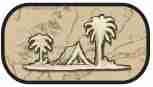 The exception is if a character has the territory-class icon below the brigade color icon. Characters with the territory-class icon are active while they remain in your territory and when they enter battle. This is a relatively new type of character for the game. A couple examples of territory-class characters are Seeker of the Lost and The Priest of Zeus.
Playing Enhancements
 Under normal circumstances you are only allowed to play an Enhancement during battle. Even then only according to the rules of initiative. However, there are special types of Enhancements that can be used during the preparation phase. Each of these 4 types has its own unique rules governing how it can be played.
 A weapon-class Enhancement can be equipped on a warrior-class character of matching brigade. A weapon does not activate when it is equipped on a warrior during the preparation phase. Instead, it is held by the warrior and activates on the warrior when he enters battle.
A healing Enhancement can be recognized by the term “heal” in the special ability. It can be played during either player’s preparation phase provided you have a character that is eligible to be healed. A healing Enhancement will activate outside of battle similar to how a Dominant is played. Since territory-class Enhancements were introduced to the game, all healing Enhancements now have this icon to indicate that they can be played at special times
A set-aside Enhancement that sets your character aside for a benefit can be played during the preparation phase to activate the special ability to set-aside a character of the same type that you control. That is, a good set-aside Enhancement can set aside your Hero and an evil set-aside Enhancement can set aside your Evil Character. Examples of this type of Enhancement are Mustering for War and Chemosh. Since territory-class Enhancements were introduced to the game all set-aside Enhancements now have this icon to indicate that they can be played at special times
Territory-class Enhancements were introduced to the game in Treasure from the Past. Like territory-class characters, the Enhancements also have the territory class icon below the brigade color icon. A territory-class Enhancement can be played anytime during the preparation phase to activate its special ability. When the ability completes, the Enhancement is discarded unless the card has instructed you to place it in another location.
Information Overload!
If you’ve made it this far, congratulations! That’s a lot of information to take in. Learning to manage all of those options during the preparation phase can be a little tricky. I hope the brief explanations above help shed some light on things for you. If you're still left with questions, please post them in the comments below.
Please join me next time as we take a look at the battle phase and the discard phase in Phase: Part 2.
To buy singles, sealed product, and other gaming supplies, please visit Three Lions Gaming!